
China manufacturing activity expands for the first time since March, beating expectations
China's manufacturing sector expanded in December for the first time in nine months, offering a glimmer of positive momentum as the world's second-largest economy heads into the new year. The official manufacturing Purchasing Managers' Index (PMI) rose to 50.1, crossing the 50-point threshold that separates expansion from contraction and surpassing the 49.2 forecast by economists.
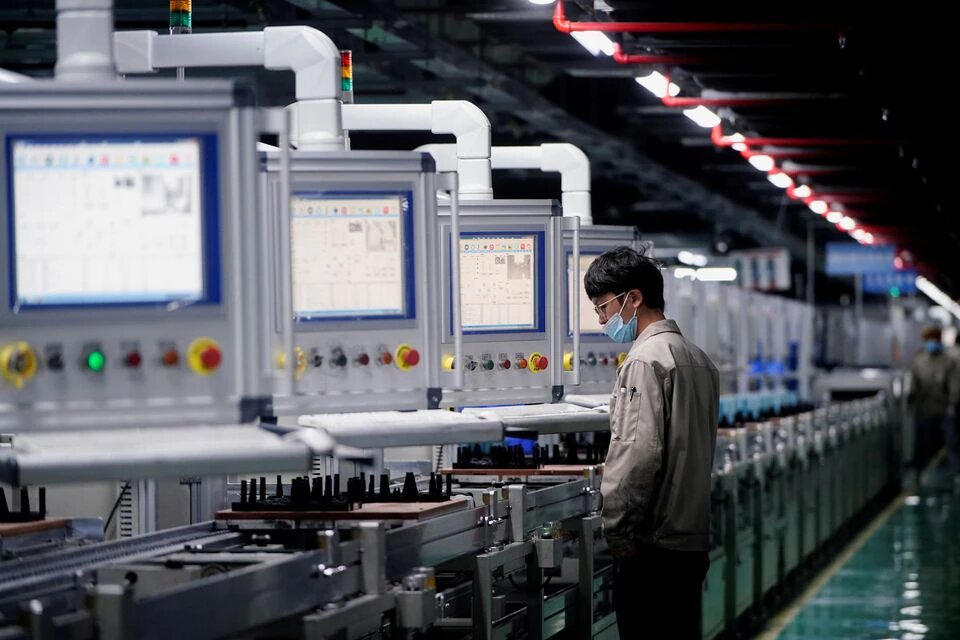
The improvement was broad-based. The composite PMI, covering both manufacturing and services, increased to 50.7 from 49.7 in November, while the non-manufacturing PMI for services and construction also edged into expansion territory at 50.2. Huo Lihui, a chief statistician at China's National Bureau of Statistics, noted a "significant expansion" in production and demand, driven by rising new orders.
The recovery was led by large enterprises, whose PMI climbed to 50.8. However, the picture for smaller firms remained bleak; medium-sized enterprises hovered just below expansion at 49.8, and small enterprises' PMI fell further to 48.6, indicating continued contraction in that vital segment.
Private-sector data from research firm RatingDog corroborated the return to expansion, with its manufacturing PMI also reaching 50.1. Founder Yao Yu pointed to sustained growth in new orders for seven consecutive months, fueled by domestic product launches and business development. He cautioned, however, that while firms remain confident for 2026, optimism levels have eased and remain below historical averages.
Market reaction was mixed, with Hong Kong's Hang Seng Index declining while mainland China's CSI 300 edged higher. The data follows a series of weak economic readings for November, including disappointing retail sales and industrial output, and comes after the central bank opted to keep key lending rates unchanged earlier this week.
Economist Hao Zhou of Guotai Junan International called the PMI reading a "very good, positive surprise" that suggests "the economy is on the right trend, and the momentum remains solid," even as persistent concerns over the property market and consumer spending linger.
Recent
News




Newsletter
Subscribe to our mailing list to get the new updates!

Subscribe our newsletter to stay updated
Most
Reviews
Finance

Finance

- Wed, 28 Jan 2026
Rick Rieder is a massive dove
Finance

- Sun, 18 Jan 2026
Syria announces ceasefire with Kurds
Markets

- Wed, 28 Jan 2026
Why the Market Dipped But Fiverr International (FVRR) Gained Today
Politics